Nadine in the field: public demos and user studies
Live demos at UN summits, a bank, schools and a TV studio, and two user studies with 123 participants.
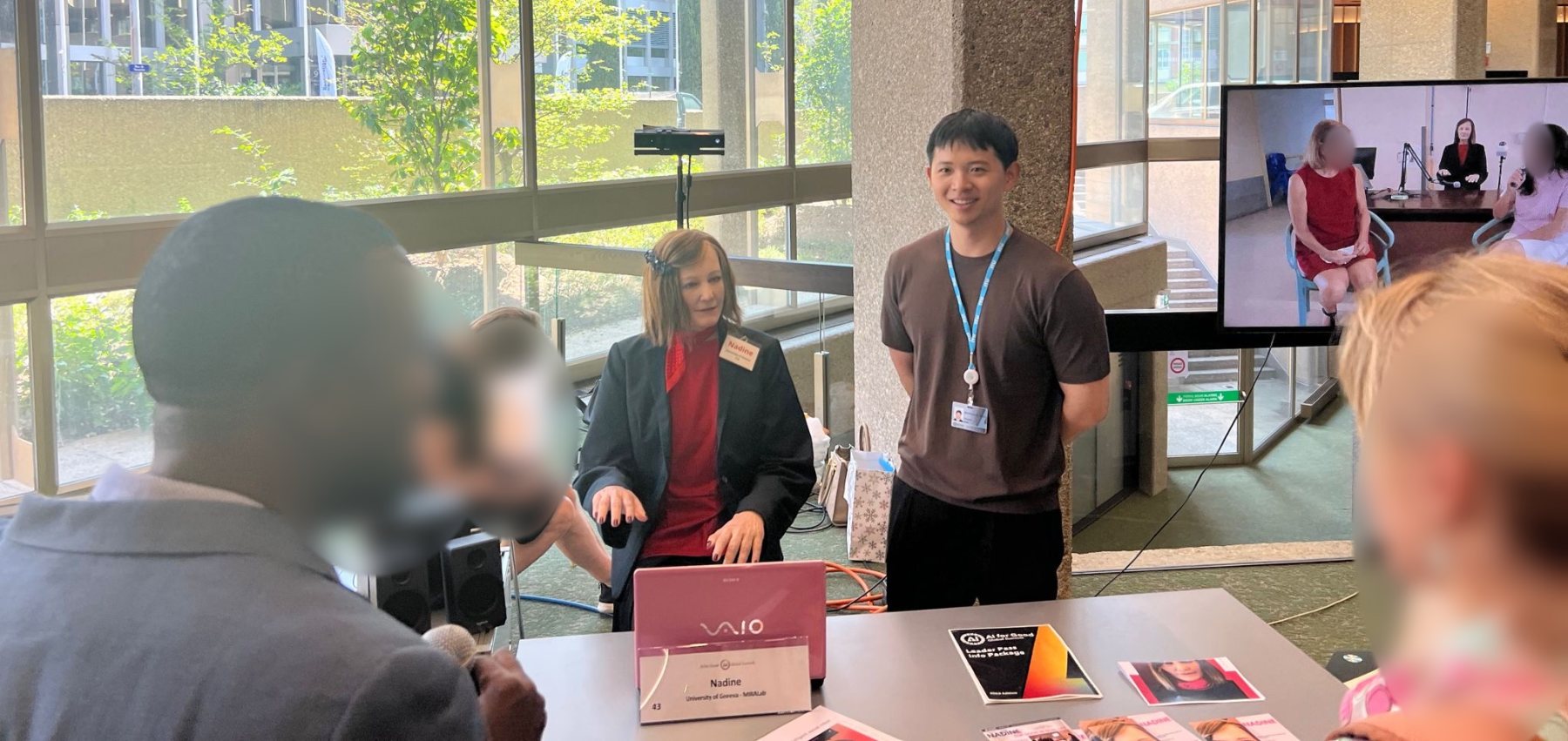
- result
- 12 public demos, 2 journal papers
- role
- Live demos, presenting to the public, study design and analysis
- skills
- Public speaking, science communication, experimental design, statistics
- 12public demonstrations, 2023 to 2026
- 50,000+combined attendance of the events where Nadine was shown
- 2journal papers from the studies
- 123participants across two user studies
Building a conversational robot is one job. Keeping it running in front of a live audience, and finding out whether people want to talk to it, is another. The technical side is on the platform page.
Live demonstrations
A live demo has no second take: unknown network, loud room, people interrupt and ask anything. That pressure shaped the demo version of the platform.
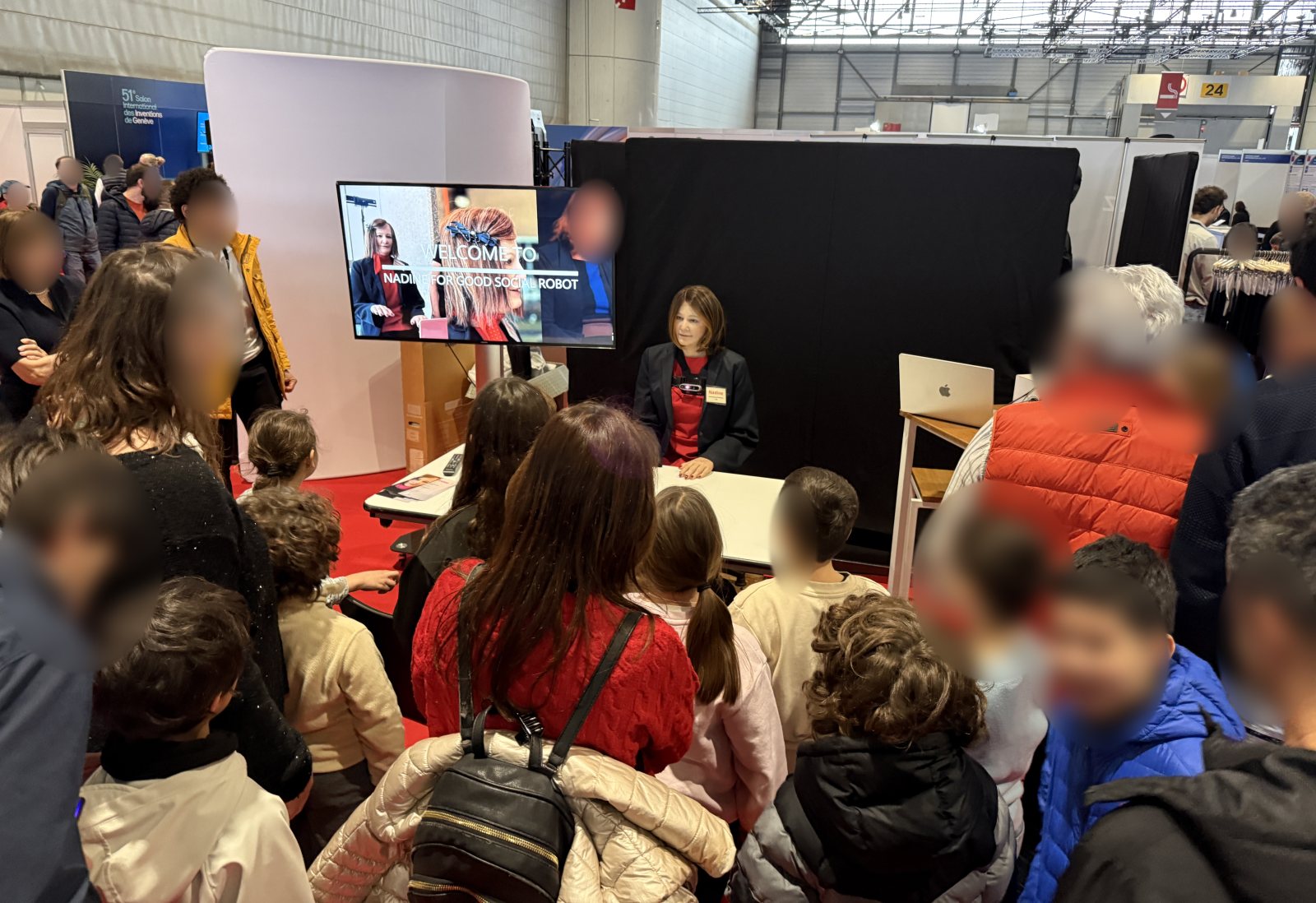
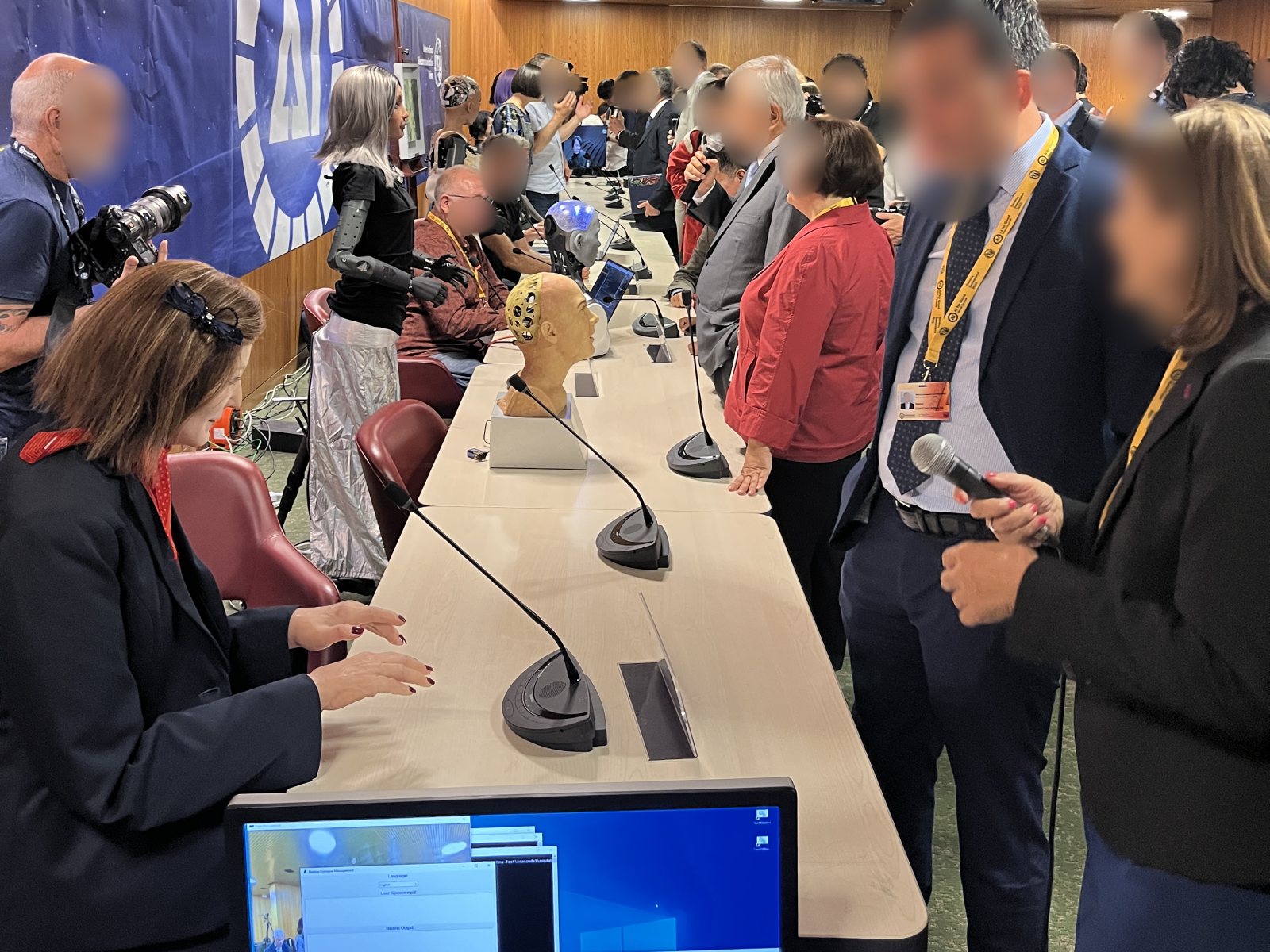
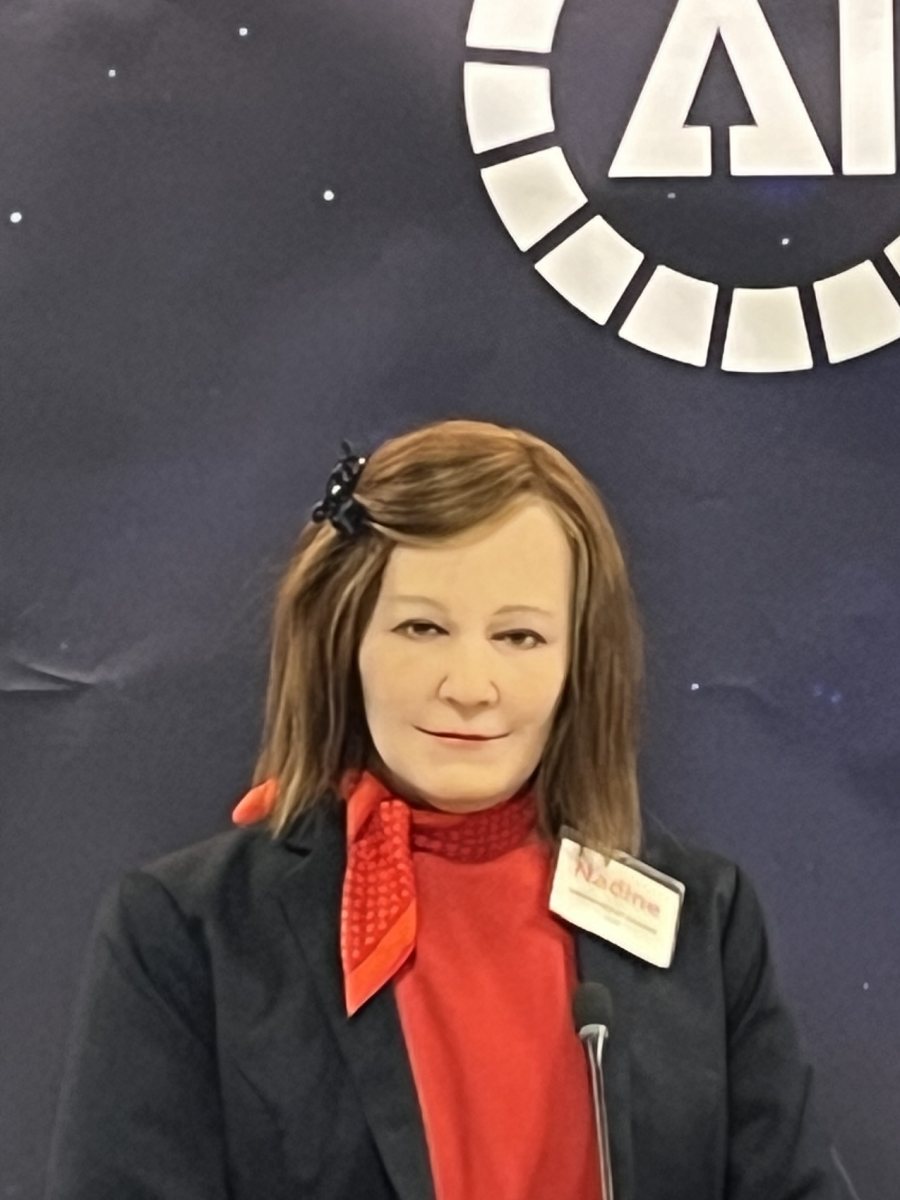
Faces of visitors are blurred.
| When | Event | Event attendance |
|---|---|---|
| Mar 2026 | International Exhibition of Inventions Geneva, Palexpo | 30,000+ visitors |
| Sep 2025 | ICAO 42nd Assembly, Montreal (remote demo) | nearly 3,000 delegates |
| Sep 2025 | Essentials of Finance, Banque Cantonale de Genève (BCGE) | |
| Sep 2025 | Léman Bleu TV, Cosmopolis: I was a guest on the episode about AI for the common good (in French, from about 18:00) | broadcast |
| Jul 2025 | AI for Good Global Summit 2025, ITU | 11,000+ participants, 169 countries |
| Jun 2025 | Global Platform for Disaster Risk Reduction, UNDRR | 3,000+ in person |
| Mar 2025 | Generative AI and the Future of Work, International Organisation of Employers | |
| Jan 2025 | The Innovation Debate, Geneva Innovation Movement | |
| Nov 2024 | Elargis tes Horizons, Geneva | 400 schoolgirls |
| Jul 2024 | Computer Graphics International 2024 (Best Technical Demo Award) | |
| May 2024 | AI for Good Global Summit 2024, ITU | about 2,500 in person |
| Jul 2023 | ITU High-level Segment | |
| Jul 2023 | AI for Good Global Summit 2023, ITU. Covered by Reuters (video with Prof. Nadia Magnenat Thalmann) | 2,500+ in person |
Attendance is each organizer’s published total for the whole event, not a count of people who met the robot. Empty cells are smaller events without a published figure.
Two user studies
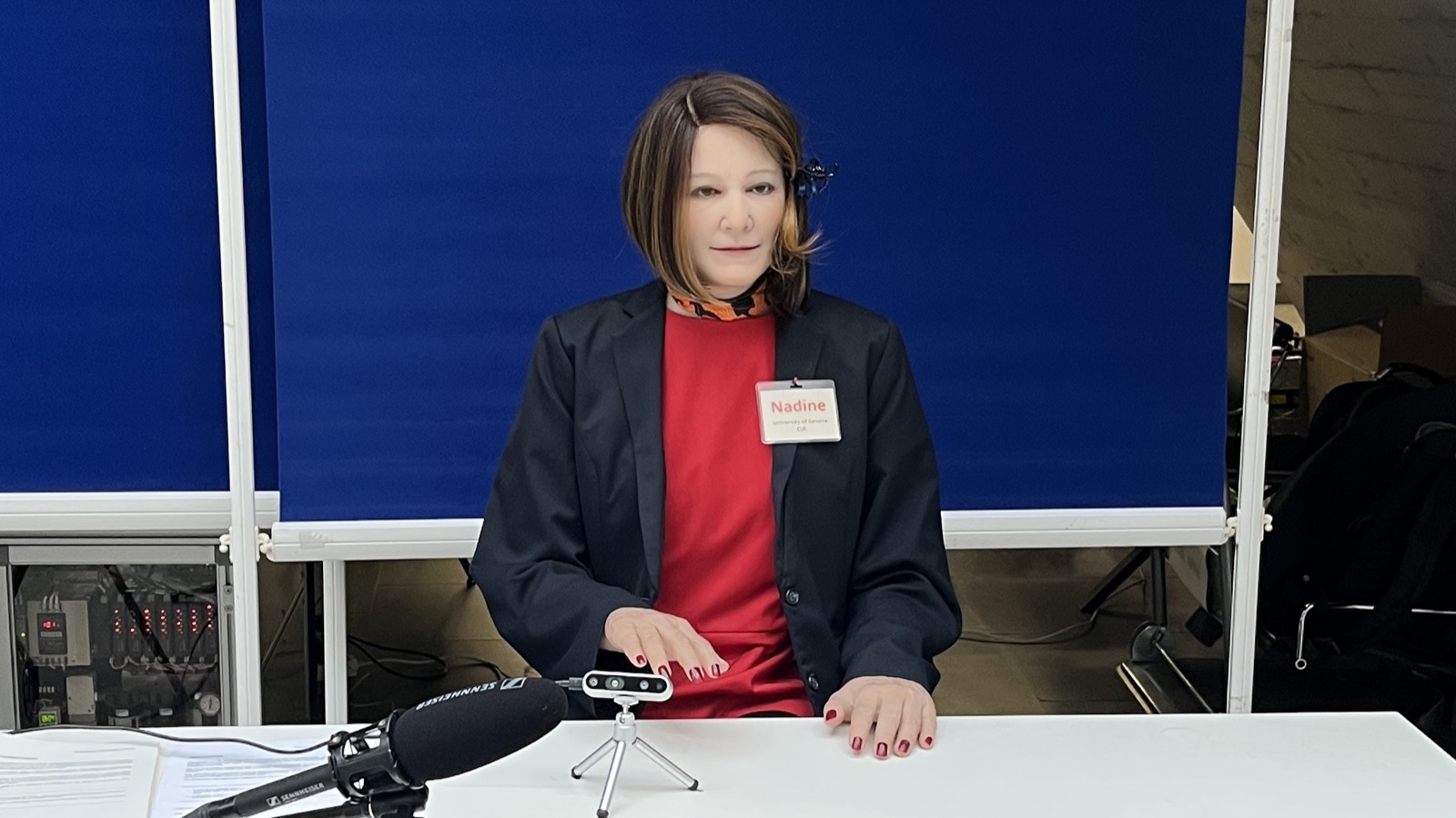
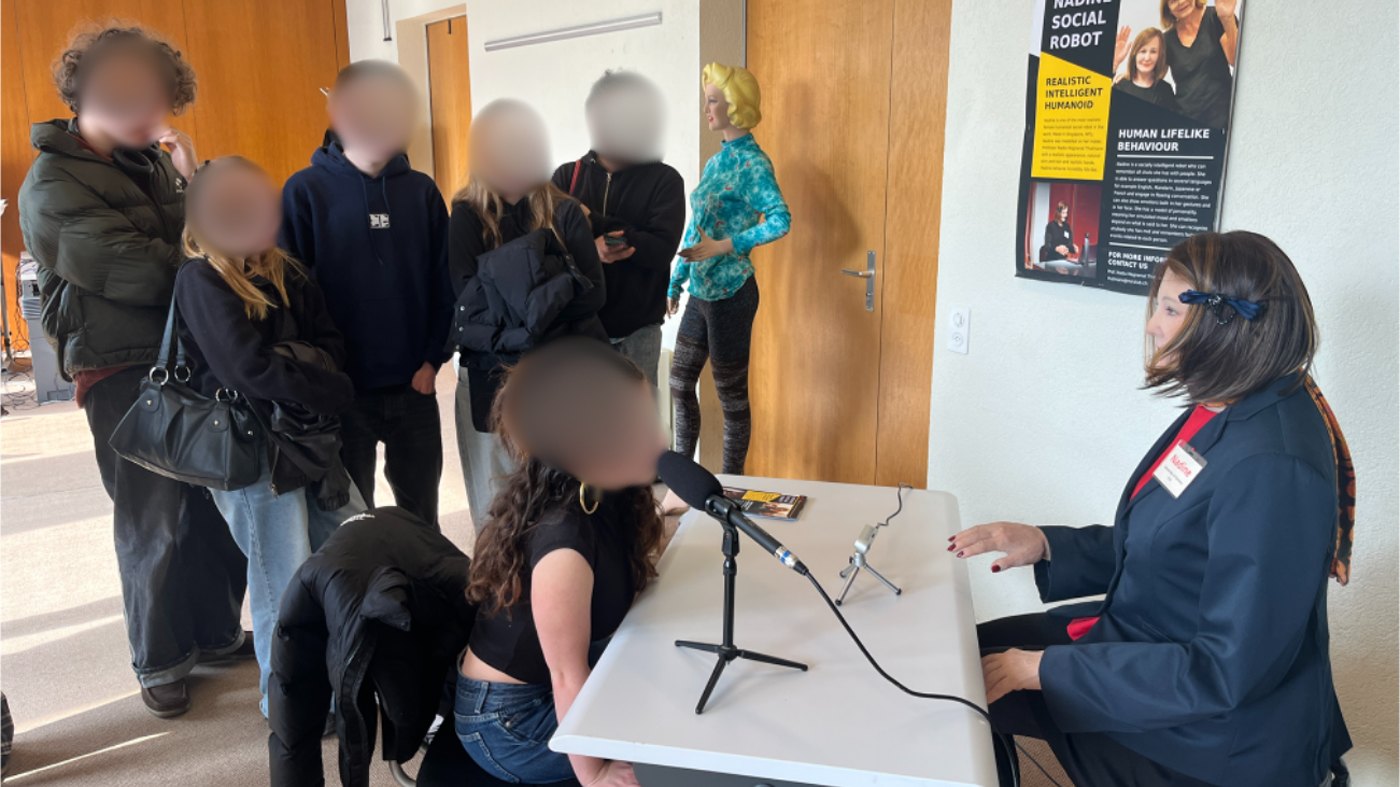
| Study 1: what makes people come back? | Study 2: teenagers, sci-fi and a real robot | |
|---|---|---|
| Where and when | Main lobby of the University of Geneva, five days, November 2024 | With Geneva’s Department of Public Instruction, one week, February 2025 |
| Participants | 68 adults, aged 18 to 34, English or French | 55 students, aged 16 to 21, French |
| Design | One-on-one conversation, no script, no operator. Questionnaires before and after, then regression | Three measurements: baseline, after four days of sci-fi films, after meeting the robot (PANAS, Technology Acceptance Model) |
| Finding | Talking made the robot seem more pleasant and less creepy, but what predicted wanting to return was how interesting and natural the conversation felt. Human-likeness did not | Films made students more nervous about robots; meeting the real one brought that back to baseline. Curiosity dropped, acceptance stayed stable |
| So what | Invest in conversation quality first; human-like styling is a complement | A good first impression is not a success criterion on its own |
| Published | International Journal of Social Robotics, 2026 | The Visual Computer, 2025 |
What I took from it
- Treating a demo as a production deployment: rehearsal, fallbacks, and a system that recovers on its own.
- Explaining a technical system to ministers, bankers, teenagers and journalists.
- Designing an experiment, getting it through ethics review, running it with the public, and doing the statistics.
